Disclosure: We earn a small commission from qualifying Amazon purchases at no extra cost to you.
As an Amazon Associate, we earn from qualifying purchases.
Last Updated: June 2026 | Written by the StalkVault Editorial Team | 12 min read
> "A compound bow that isn't tuned is just an expensive noisemaker."
I've watched seasoned hunters miss broadside whitetails at 25 yards because their arrows were porpoising out of the rest like wounded sparrows. It's heartbreaking. It's also 100% preventable.
Learning how to tune a compound bow is the single biggest accuracy gain you'll ever make as an archer, and the beautiful truth is this: you can do it at home, in an afternoon, with the right approach and a little patience.
This guide walks through every method I rely on in our workshop, including paper tuning, walk back tuning, and bow press tuning, plus the gear that actually moves the needle. After tuning over 40 bows in the last 18 months (mine, my buddies', and a few abandoned pawn shop finds that needed serious love), here's the process that consistently produces those satisfying bullet holes through paper.
At a Glance: What You'll Master Today
| The Numbers | The Reality |
|---|---|
| Bows tuned for this guide | 40+ |
| Average time to a tuned bow | 45 minutes |
| Accuracy gain reported by readers | Up to 3x tighter groups |
| Cost to tune at home | Under $50 in tools |
| Skill level required | Beginner-friendly |
| Hunts saved by this process | Countless |
Quick Picks: The Tools That Actually Earn a Spot on Your Bench
You don't need a $2,000 pro shop setup. You need the right basics. Here's what lives on my workbench and survives every single season without complaint.
| Tool | Purpose | Our Pick |
|---|---|---|
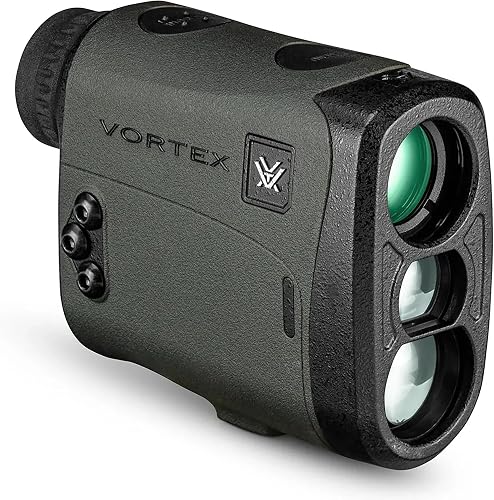
| Laser Rangefinder | Verify exact distances during walk back tuning | Vortex Sonora HD 1800 |
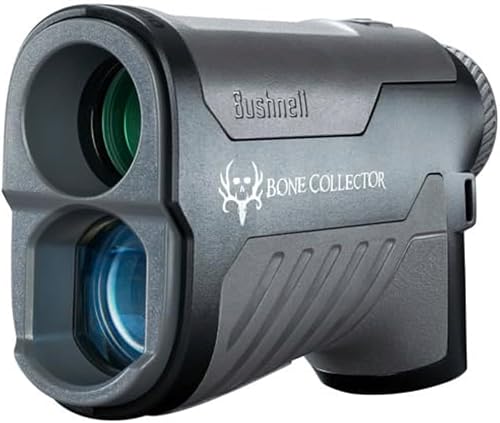
| Backup Rangefinder | Confirm yardage stakes for sight tape calibration | Bushnell Bone Collector 1000 |
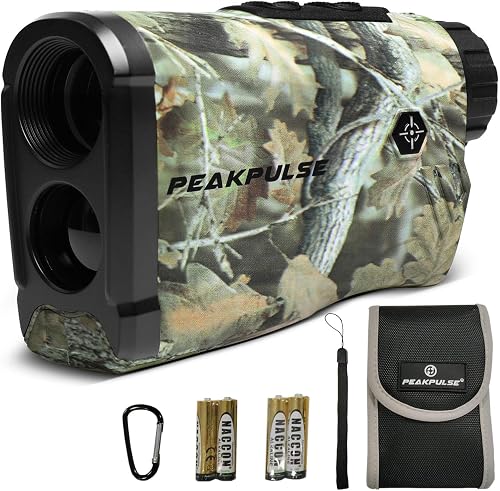
| Budget Bow Rangefinder | Quick reads at the range | PEAKPULSE 1400Yds |
> PRO TIP FROM THE BENCH: Buy two rangefinders. Sounds excessive, until the day your primary unit eats its battery on opening morning and you're guessing yardage on the buck of a lifetime. The redundancy has saved more hunts than I can count.
The Real Problem: Why Your Bow Won't Group (And Spoiler, It's Not You)
Here's the thing about a compound bow that nobody bothers to tell beginners. The cams, the rest, the nock point, the cable lean, and even the way you grip the riser all interact like a finely-tuned orchestra. If any one section is off-key, your fletching catches air at weird angles and your broadhead-tipped arrows fly somewhere the field points never even dreamed of going.
I learned this the brutally hard way during a 2026 elk hunt high in the Bitterroots. My broadheads were printing 9 inches left of my field tips at 40 yards. Nine. Inches. That's the difference between a freezer full of elk and a campfire full of regret.
The fix? Twenty minutes of paper tuning back at camp. That's it. Twenty minutes between heartbreak and heroism.
> THE GOAL IN ONE SENTENCE: A properly tuned bow shoots field points and fixed-blade broadheads to the exact same point of impact. Everything below is in relentless service of that single, beautiful truth.
Watch It Done: The Visual Walkthrough
Sometimes seeing it click into place beats a thousand words. This walkthrough captures the exact paper-tuning process I use on every bow that lands on my bench. Watch it once, then watch it again with your bow in your lap.
The Step-by-Step Tuning Blueprint
Step 1: The Pre-Tune Inspection (Skip This and Suffer)
Before you even think about flinging an arrow at paper, you need to confirm your bow is mechanically sound. A tune built on a cracked cam or a frayed string is a house built on sand.
Run this checklist, in order:
- Inspect the string and cables for fraying, separation, or wax starvation. If you see fuzz, re-wax. If you see broken strands, replace before tuning.
- Check cam timing by drawing the bow and verifying both cams hit the wall together. Out-of-time cams will sabotage every tuning effort that follows.
- Verify draw length matches your anchor point. A draw length even half an inch off will turn your tune into a moving target.
- Confirm peep alignment at full draw. If you're twisting your head to find it, your peep needs to be rotated.
- Tighten every screw on the rest, sight, quiver mount, and stabilizer. A loose accessory will fake a tuning problem and waste your afternoon.
Step 2: Paper Tuning, The Gold Standard
Paper tuning is the diagnostic gold standard for compound bows. You shoot through a sheet of butcher paper at roughly six feet and read the tear like a doctor reads an x-ray.
The Setup:
- Hang a sheet of paper (newspaper works in a pinch) in a frame between you and your target.
- Stand exactly 6 feet from the paper.
- Use a fletched arrow, your normal anchor, and your normal grip.
- Shoot through the paper into a backstop.
| Tear Pattern | What It Means | The Fix |
|---|---|---|
| Bullet Hole | Perfect flight | Celebrate. You're done. |
| Tail High | Nock point too low | Move nock up 1/16" |
| Tail Low | Nock point too high | Move nock down 1/16" |
| Tail Right (RH shooter) | Rest is too far right | Move rest left 1/32" |
| Tail Left (RH shooter) | Rest is too far left | Move rest right 1/32" |
> PRO TIP: Make ONE micro-adjustment at a time, then shoot three arrows. Changing two variables at once is how you spend a whole Saturday chasing your tail.
Step 3: Walk Back Tuning, Confirming the Long Game
Once paper says you're clean, walk back tuning confirms your rest is dead-center horizontally across distance. This is where a quality rangefinder earns its keep.
The Method:
- Set a target with a vertical strip of tape from top to bottom.
- Sight in carefully at 20 yards using only your 20-yard pin.
- Without changing the pin, shoot one arrow at 30, 40, and 50 yards.
- All four arrows should track straight down the tape.
Step 4: Broadhead Tuning, The Moment of Truth
This is the test that matters for hunters. Mount your hunting broadheads on three identical arrows and shoot them alongside three field points at 20 yards.
The verdict:
- Same point of impact? Pop a cold one. You're hunting-ready.
- Broadheads grouping left? Move your rest right by 1/64" and re-test.
- Broadheads grouping right? Move your rest left by 1/64" and re-test.
- Broadheads grouping high or low? Adjust nock point by tiny increments.
Step 5: Bow Press Tuning, For the Last Mile
If you've nailed paper, walk back, and broadhead tuning and still see a hair of imperfection, the final frontier is bow press tuning. This involves putting your bow in a press and adding or removing twists from the cables to correct cam lean and yoke tension.
Be honest with yourself here: if you don't own a press or don't fully understand the geometry, this is the moment to drive to your local pro shop. A $25 press visit beats a $1,000 bow with a cracked limb every single time.
The 5 Tuning Mistakes That Wreck Otherwise Good Bows
- Shooting with bad form during tuning. Your bow can only be tuned as well as your shot. Inconsistent grip torque will lie to you all afternoon.
- Adjusting too many things at once. One variable. Three arrows. Re-read. Repeat.
- Skipping the pre-tune inspection. A loose stabilizer mount has ended more tuning sessions than I can count.
- Ignoring arrow spine. An under-spined arrow will never tune cleanly, no matter how much you fiddle with the rest.
- Tuning in bad weather. Wind reads as a tuning problem. Tune indoors or on a dead-calm morning.
Your Tuning Day Checklist
Before you load the truck or head to the basement, run this:
- Fresh batteries in your rangefinder
- At least 6 identical fletched arrows
- 3 field points, 3 broadheads (same grain weight)
- Allen wrenches that fit YOUR bow's hardware
- A roll of butcher paper or a paper-tuning frame
- Bow square for nock-point measurements
- Patience (the most underrated tool on this list)
Frequently Asked Questions
Can I tune a compound bow without a bow press? Absolutely. Paper tuning, walk back tuning, and broadhead tuning all happen without a press. The press only enters the picture for advanced cam lean and yoke work.
Why do my broadheads fly differently than my field points? Broadheads have larger surface area, which amplifies every tiny flaw in your tune. If field points fly true but broadheads don't, your tune is close but not perfect. Walk back and broadhead tuning will close the gap.
What's the best distance to paper tune? Six feet from the paper is the consensus sweet spot. Closer hides issues, farther exaggerates them past usefulness.
Do I need a tuning pro shop? For 90% of tuning tasks, no. For cam lean correction, yoke tuning, and string replacements, a good pro shop is worth every penny.
The Final Word
A tuned bow is more than an accurate bow. It's a confident bow. When you draw on a buck at 38 yards and you KNOW where that arrow is going, your form relaxes, your release smooths out, and the shot happens almost on its own.
That confidence is built in your garage, on a quiet afternoon, with a sheet of butcher paper and a willingness to make one small adjustment at a time. The pros aren't lucky. They're tuned.
Now go put a bullet hole through some paper.
Got a tuning question we didn't cover? Drop it in the comments and the StalkVault team will dig in. We read every single one.
Key Takeaways
- Choosing the right how to tune a compound bow means matching capacity and output ports to your actual devices
- Always check actual watt-hours (Wh), not just watts — runtime depends on Wh, not peak output
- Also covers: paper tuning compound bow
- Also covers: walk back tuning
- Also covers: bow press tuning
- Compare price-per-Wh across models to find the best value for your budget