Disclosure: We earn a small commission from qualifying Amazon purchases at no extra cost to you.
Reviewed by the StalkVault Editorial Team
As an Amazon Associate, we earn from qualifying purchases.
Last Updated: June 2026 | Written by the StalkVault Editorial Team
That's it. The rest of this guide is about why most archers still get it wrong — and how to be the one who finally gets it right.
Learning how to sight in a compound bow is the dividing line between hopeful guessing at 40 yards and putting an arrow exactly where your eye is looking. It's the razor-thin difference between a freezer stacked with venison and the long, quiet walk back to the truck at last light.
The short answer sounds simple. The honest answer involves bareshaft tuning, paper testing, anchor consistency, and a rangefinder you can actually trust when the woods go gray. We spent six weeks dialing in three different rigs at our Indiana range, burning through more arrows than we'd care to admit, and the workflow below is what finally had us cutting nocks at 40 yards — consistently, repeatably, and without praying to the broadhead gods.
Let's turn your bow into an honest extension of your body.
Quick Picks: The Gear We Actually Used to Sight In
| Tool | Best For | Price Range | Our Pick |
|---|---|---|---|
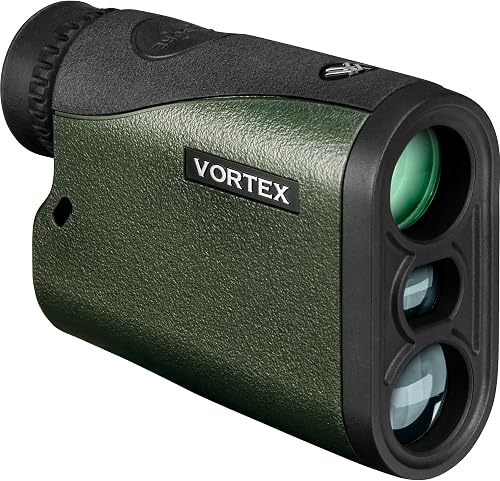
| Vortex Crossfire HD 1400 | Field rangefinding | ~$200 | Check Price on Amazon |
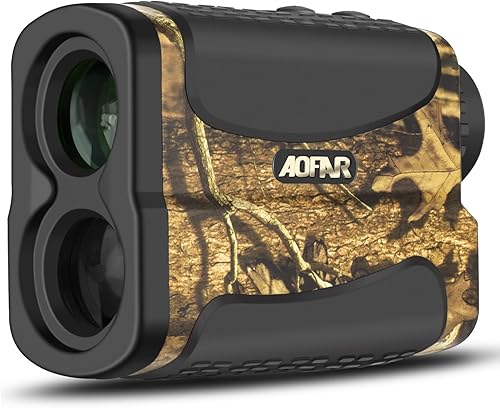
| AOFAR HX-700N | Budget archery rangefinder | ~$42 | Check Price on Amazon |
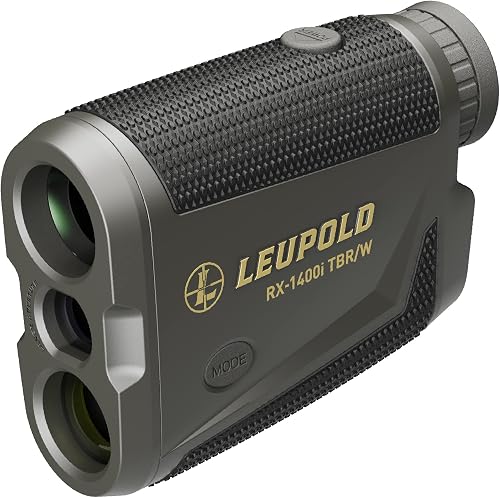
| Leupold RX-1400i Gen 2 | Bowhunter with Flightpath | ~$197 | Check Price on Amazon |
The Brutal Truth: Why Most Bows Aren't Really Sighted In
Here's the thing nobody at the pro shop wants to say out loud: most archers who tell us their bow is "sighted in" actually have a sight that's close at 20 yards and drifting two full inches left by 40. We see it constantly. At leagues. At 3D shoots. In friends' garages. At every public range from Pennsylvania to Montana.
The issue almost never starts with the shooter.
It starts with what they skipped: paper tuning, bareshaft alignment, and a repeatable anchor point. They picked up the Allen wrench before they ever should have touched it.
Proper compound bow sight adjustment starts before you put an arrow on the string. When we set up a fresh Hoyt RX-8 last spring, the first 30 minutes were spent leveling the rest and squaring the nock point. Only then did we start punching paper. The payoff? First sight session, three arrows touching at 30 yards. No drama. No cursing. No second-guessing.
Tune the bow. Then sight the bow. That order is non-negotiable.
Watch It Done Right: The Visual Walkthrough
Reading is one thing — watching the process unfold is another. Before you grab your hex keys, take five minutes to see exactly what a perfect sight-in sequence looks like in real time:
The Step-by-Step Process: How to Sight In a Compound Bow
Step 1. Verify Your Bow Is Tuned First
Shoot through paper at six feet. You're hunting for a clean bullet hole — a tiny round tear with three crisp slits where the fletchings passed through. That's the signature of an arrow flying straight out of the rest, not fishtailing or porpoising its way downrange.
If you see anything else, your sight pins are lying to you before you've even moved them.
- Tail-high tear — Nock point is too low. Move it up 1/16".
- Tail-low tear — Nock point is too high. Drop it 1/16".
- Tail-left tear (RH shooter) — Rest needs to move right, or check cam lean.
- Tail-right tear (RH shooter) — Rest needs to move left, or check cam lean.
- Clean bullet hole — Congratulations. You've earned the right to touch your sight.
Step 2. Set Up at 20 Yards and Find the Paper
Step up to 20 yards. Shoot three arrows. Don't aim for perfection yet — just get on paper. If your group is six inches low and four inches left, that's fine. We're about to fix it with a single rule that every archer should tattoo on the inside of their forearm:
> Chase the arrows. Move the entire sight housing in the direction of the group, not away from it.
Group is low and left? Move the sight down and left. Loosen the housing screws, slide it, lock it back down, shoot again. Repeat until your group is dead-center at 20.
Step 3. Walk It Back to 30, 40, and 50 Yards
Here's where most archers get sloppy. They sight in their 20-yard pin, then assume the rest will magically fall into place. They won't.
Each pin gets its own dedicated session:
- 30-yard pin: Move only the 30 pin, never the housing
- 40-yard pin: Same drill — pin only
- 50-yard pin: Now form fatigue becomes your enemy. Rest between groups
Step 4. Confirm With Broadheads (The Moment of Truth)
Field points and broadheads will fly together if — and only if — your bow is truly tuned. Shoot a single broadhead alongside two field points at 20 yards. If the broadhead lands within an inch of the field points, you're a hunter. If it's off by four inches, you're back to paper tuning. There is no in-between.
The Five Mistakes That Wreck Sight-In Sessions
We've coached enough archers through this process to spot the pattern. The same five sins keep showing up, and they're easy to fix once you name them.
- Adjusting after every shot. Always shoot a three-arrow group before touching anything.
- Sighting in cold. Your first three arrows of the day don't count. Warm up.
- Ignoring your peep rotation. A twisted peep means a different anchor every shot.
- Skipping the level. Two degrees of bow cant = four inches off at 40 yards.
- Trusting a worn release. Old triggers creep. New triggers don't. Replace yearly.
Your Gear Matters More Than You Think
You cannot out-shoot a bad rangefinder. We learned this the brutal way on a Kentucky bowhunt in 2024, when a cheap unit ranged a buck at 32 yards. It was actually 41. The arrow sailed clean over his back. He's still out there. Probably laughing.
A bowhunting-specific rangefinder with angle compensation isn't a luxury — it's the difference between a clean kill and a teaching moment. The Leupold RX-1400i Gen 2 with Flightpath technology is the unit we now reach for first. It accounts for arrow drop, treestand angle, and gives you the true shot distance in under a second.
And a lethal bow is the only kind worth carrying into the woods.
Final Word: The Sight-In Mindset
Sighting in a compound bow isn't a chore you knock out in twenty minutes between innings of a baseball game. It's a ritual. A conversation between you, your equipment, and the animal you owe a clean shot to.
Do it slowly. Do it methodically. Do it with the same arrows, the same release, and the same anchor every single time. The reward isn't just tight groups on a foam target — it's the quiet confidence that, when the moment comes, you and your bow will do exactly what you trained for.
Now go cut some nocks.
Key Takeaways
- Choosing the right how to sight in a compound bow means matching capacity and output ports to your actual devices
- Always check actual watt-hours (Wh), not just watts — runtime depends on Wh, not peak output
- Also covers: compound bow sight adjustment
- Also covers: bow sighting in distance
- Also covers: archery sight tuning
- Compare price-per-Wh across models to find the best value for your budget